Water in Your Home? Start Here
Water is in your home. Take a breath. You can handle this one step at a time.
Domesticlewis Restoration is a referral service. We connect homeowners in Louisville and the Louisville metro area with independent providers who do water damage restoration. We do not do the work ourselves. The provider does.
Start with the basics. If it is safe, stop the source. Shut off the main water valve for a burst pipe. Stay out of standing water near outlets and cords. Move small items to dry ground. Take photos before you touch much.
Then talk to a provider. Many providers offer emergency water damage repair and can respond quickly, but availability varies from one provider to the next. Request a callback to check provider availability.
Ask good questions. How will you remove the water? How will you dry the structure? What will the written estimate list? This site shows you what to ask, what a good answer sounds like, and which answers are red flags.
Request Service
Want to compare options first? You can also request an estimate. There is no obligation, and you decide what happens next.
How It Works
What Domesticlewis Restoration does
Domesticlewis Restoration is a matching service. You tell us about the damage. We connect you with a provider in our network who works in your part of KY. That is the whole job.
What Domesticlewis Restoration does not do
We do not pump water, run dryers, or tear out walls. We do not set prices. We do not promise a start time. Independent providers do the work, and each one runs its own business.
That matters to you. It means you should still ask questions, read the estimate, and make your own choice. We are here to help you do that with less stress.
The steps, in plain words
- Reach out. Request a callback to check provider availability, or send a request.
- Talk to a provider. Describe what happened. Share photos if you have them.
- Get a written estimate. It should list the work, the equipment, and the cost.
- Compare and decide. Take your time. You can say no.
Why we push you to ask first
Most bad jobs start with a rushed yes. A short list of questions can protect your home and your wallet. You will find our favorites throughout this page, along with the red flags that tell you to pause.
Good providers expect questions. They explain things in plain words. They are happy to put the plan in writing. If a provider gets annoyed when you ask, that tells you something too.
Homes We See in Louisville
Homes in Louisville and the Louisville metro area face real weather. Summers are humid. Nor'easters push rain sideways and flood low spots. Winters bring frost and thaw, which can crack pipes and open small gaps in foundations.
The houses matter too. Many are colonial or split-level homes with basements. A basement sits below the ground, so water has an easy path in. Some older areas have rowhouses, where a leak next door can become your problem. Many older homes still have cast-iron or galvanized plumbing. Those pipes rust from the inside and can fail without warning.
So what does that mean for you? Wet basements, burst pipes, and slow leaks behind walls are common. Humid air can also help mold grow once things stay damp. Mold is a fungus that grows on wet surfaces.
A local provider knows these house types. Ask whether they have worked on homes like yours. A good answer names the kind of home and the usual trouble spots.
Request Service
Not sure yet? You can send a request and compare what providers say before you choose.
Hire With Confidence: Questions to Ask
Start with the plan
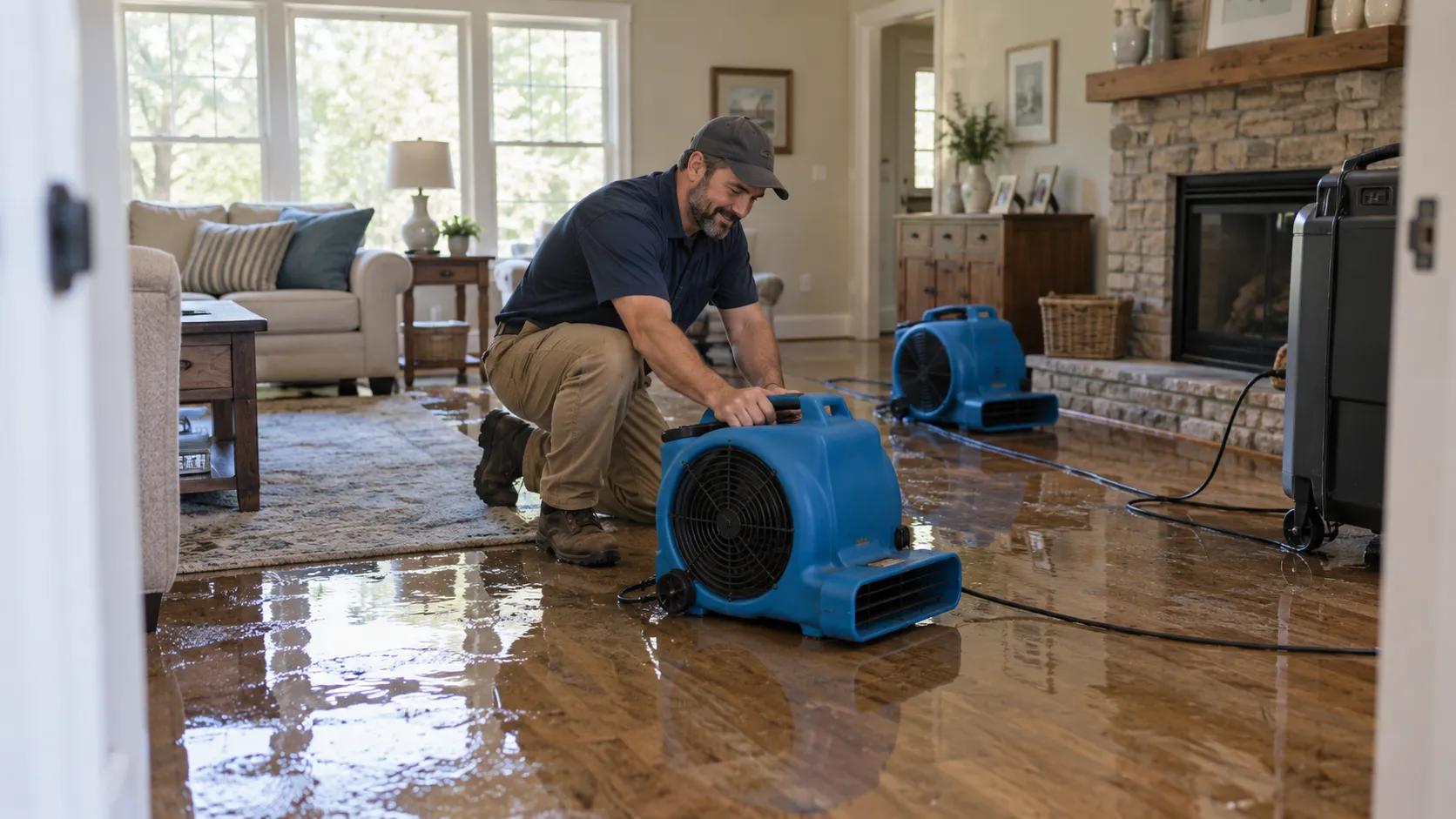
Ask the provider to explain the steps in order. A good answer covers water extraction, which means pulling standing water out of the home. Then it covers structural drying, which means drying floors, walls, and framing with fans and dryers until they reach safe moisture levels. A weak answer is a vague line like "it will dry out on its own."
Ask how they measure dryness
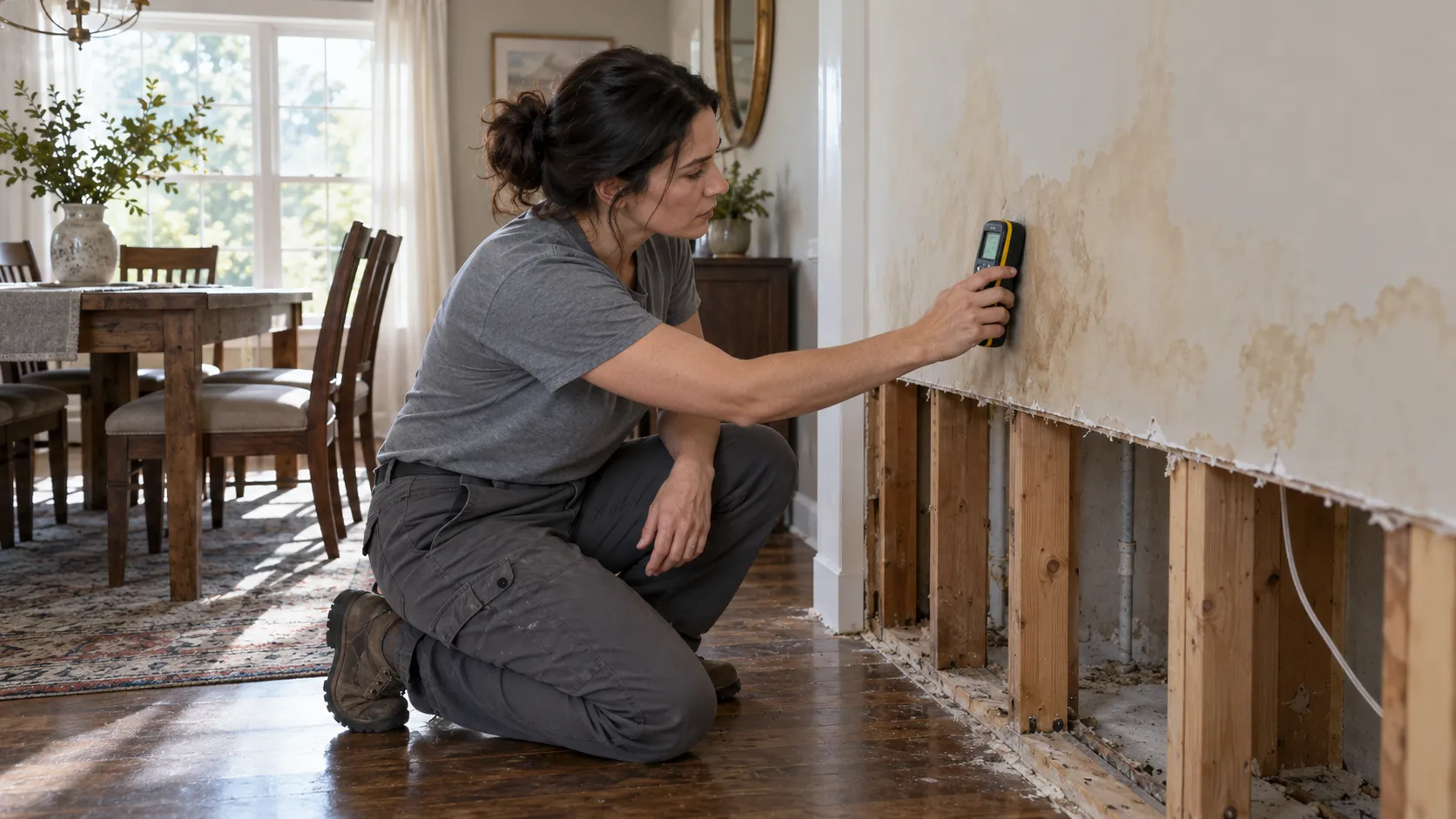
A good provider uses moisture meters and writes down the readings. Ask to see them. Red flag: a provider who says the home "feels dry" and stops.
Ask what goes in writing
Get a written estimate. It should list the rooms, the work, the equipment, and how long the equipment will run. Red flag: a vague price on a text message, or a price that changes with no explanation.
Ask about basements
For flooded basement cleanup, ask how they handle dirty water, wet insulation, and soaked drywall. Ask how they find where the water came in. A good answer includes the source, not only the mess.
Know the red flags
- Pressure to sign on the spot
- A demand for the full payment up front
- No written estimate
- Tearing out far more than the damage seems to need, with no reason given
- Refusing to explain a term
Compare, then decide
Get more than one estimate if you can. Line them up side by side. Look at what is included, not only the total. Typical U.S. water damage jobs can run from about $1,000 for a small cleanup to $5,000 or more for larger ones. Costs vary by job, so always get a written quote.
Think about your policy
Some policies may cover sudden damage, such as a burst pipe. Check your policy. Many providers can help document the damage for a claim. Take photos and keep your receipts.
You are in charge
You do not owe anyone a quick yes. Take a day to compare if the situation is safe. Choose the provider who answers clearly and treats you with respect.
Ready When You Are
Have water in your home right now? Request a callback to check provider availability. Call hours vary by provider, so ask about timing when you connect.
Request Service
Prefer to compare first? Send a short request with a few details about the damage. A provider in our network can follow up with an estimate. There is no obligation.
Request Service